
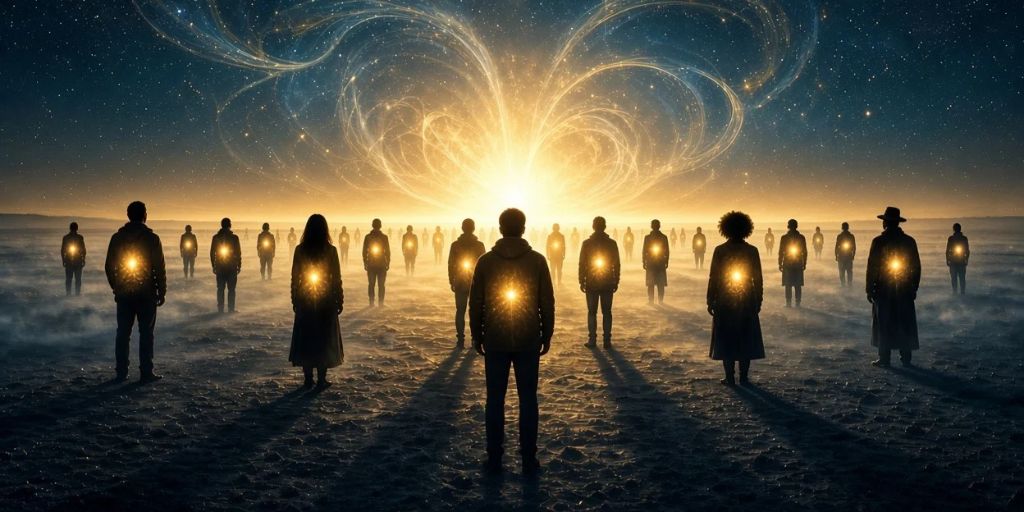
If someone asked me how I would describe good vs. evil, the best way would be to remember the Golden Rule. It’s the ethical principle of treating others as you would want to be treated and not doing to them anything you wouldn’t want done to you.
My different understandings of human character, from my twenties to my thirties and forties
At the top are the good ones; at the bottom are the evil ones. In between, there’s everything else.
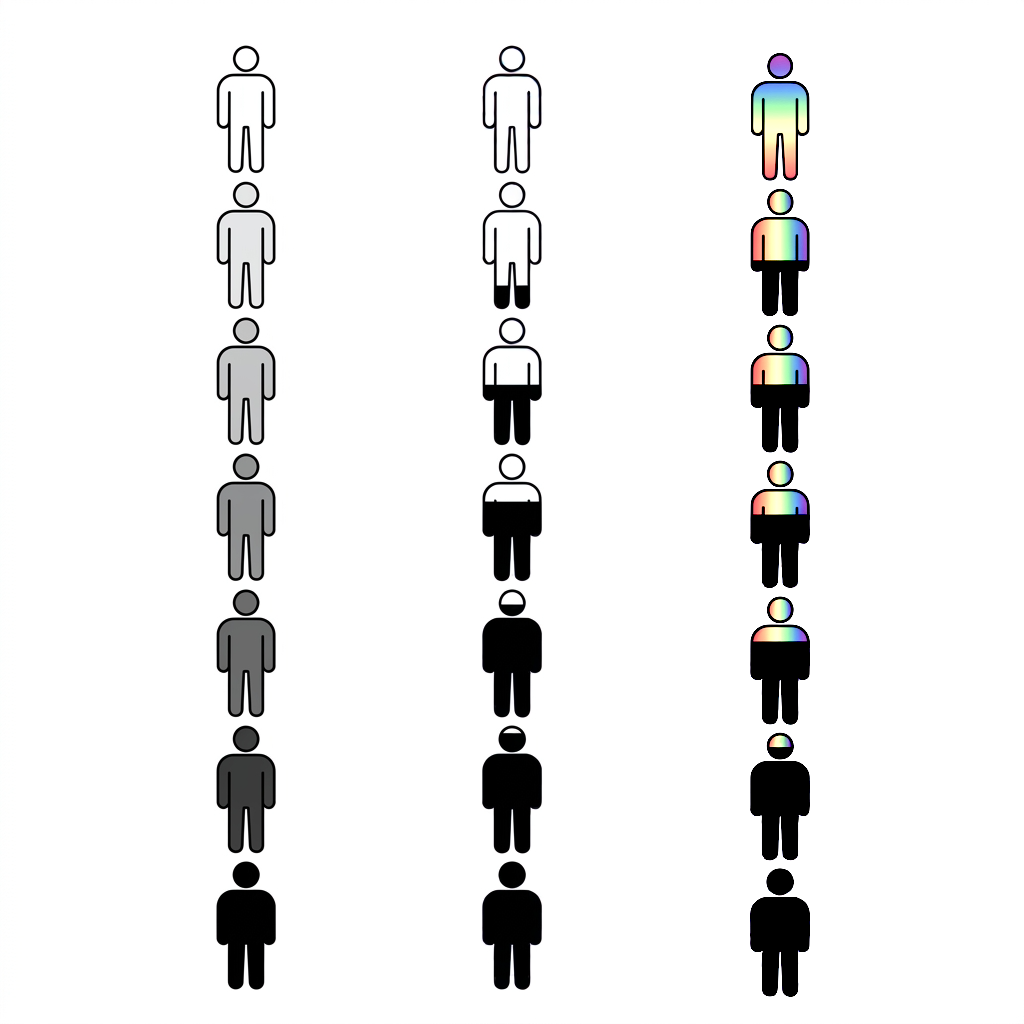
1st column (my early understanding)
People have different shades of goodness. Usually, those in our closest circle are the righteous ones, and everyone who acts in the opposite way is considered bad.
2nd column (a more advanced view)
Most people have varying amounts of good and bad thoughts, words, and actions, depending on their confidence, gratitude, and principles, as well as their shortcomings, insecurities, and negative past experiences. It’s human to embody both virtues and vices.
3rd column (a more recent, deeper understanding)
People at the top are very sensitive and empathetic. I see them like angels or living saints. They consciously practice unconditional love, compassion, healing, and helping others. They feel deeply and see beauty in things that might go unnoticed or seem mundane to ordinary people.
At the very bottom are the predators, who consciously and deliberately choose to manipulate, exploit, dominate, humiliate, and destroy others, fueled by revenge, hatred, resentment, and a distorted sense of superiority. They act against others and even against themselves.
There are very few people at either extreme. Most of us are somewhere in the middle, experiencing a range of feelings, having some degree of rationality, and carrying our own shadows.
Also, those who are responsible for others often have many more nuances than what’s shown in this model, depending on their connections to individuals and groups of people.
Why do good people have bad thoughts, speak badly, and do bad stuff?
Life has no single rulebook, and everyone learns to navigate it in their own way. Regardless of your upbringing, belief system, or educational background, many decisions are made through trial and error. Sometimes, choices are made unconsciously or in an overly impulsive state. Sometimes, people have to make compromises and choose the best option among a few bad ones. Often, mistakes happen, leading to lessons that need to be learned. Sometimes, people let others steer their wheels. And sometimes, everything just seems like bad luck, and we look outside ourselves for someone to blame.
We connect the dots and gain more wisdom later.
Moreover, consumable intoxicants, mold, and air pollution can weaken your etheric body. Ruminative, self-critical inner thoughts, often induced by parasitic spiritual entities attached to the etheric body, can amplify your insecurities based on past negative experiences or mistakes. If you know, you know.
But use your discernment. Some of those thoughts could also be considered the voice of conscience or a catalyst guiding you toward positive change.
Those who are aware of demonic torment often fear losing something: wealth, mental health, security, home, relatives, or dignity. So they remain entangled with the evil within, holding on to bad thoughts or doing bad things to others, even when it goes against their own morals.
And then there are social norms and behaviors that perpetuate negativity: conversations with people who are unconsciously stuck in negative patterns or who are malevolent and manipulative; repetitive, frightening news; movies that normalize killing and other ill behavior; and dark humor that normalizes disrespect toward one another. We’ve simply become too accustomed to it.
Finally, I see historically created systems at play: innovations or other changes create suspicion; the media reinforces both the change and the criticism; people experience or witness the outcomes, become frightened, and develop social or mental health problems; new laws are created to reduce the impact of that change; and new products or services emerge to solve the problems it caused. Then another innovation or change comes along, and the cycle repeats.
Personally, everything related to manipulation and human cloning triggers me. And now there’s wetware — brain-cell-based computer centers. Keeping in mind that we’re all interconnected at the spiritual level, I see a lot of danger in the prospect of literal mind control through programming in the near future. Not a fan.
How to increase the light
But what’s the solution for increasing the good and reducing the evil within?
First of all, evaluate yourself, or let someone close to you whom you trust do it, without taking their criticism personally. Know thyself.
Tidy up your environment, nutrition, and informational field. Get rid of the rubbish.
Meditate to understand which of your thoughts are conscious and voluntary, and which are ruminative, repetitive, and involuntary.
Get more in touch with your heart center. Accept yourself more, trust yourself, and love yourself.
Take care of your body. It’s your camper van, the vehicle you’ll live in and drive for the rest of your life. Or think of it as your garden, temple, or palace, the place where your best memories and emotions reside.
Learn nervous system regulation techniques and incorporate somatic practices into your daily life.
Every now and then, do something that inspires you and brings you joy: connect with your closest people and like-minded souls, connect with nature, create something, enjoy your hobbies, listen to music that evokes higher emotions than your usual ones, keep a gratitude journal, and learn something interesting every day.
Have principles.
Take action on the things you’d like to change, no matter how small your contribution may be.
P.S. The illustration provided has no reference to skin color or sexual orientation.