
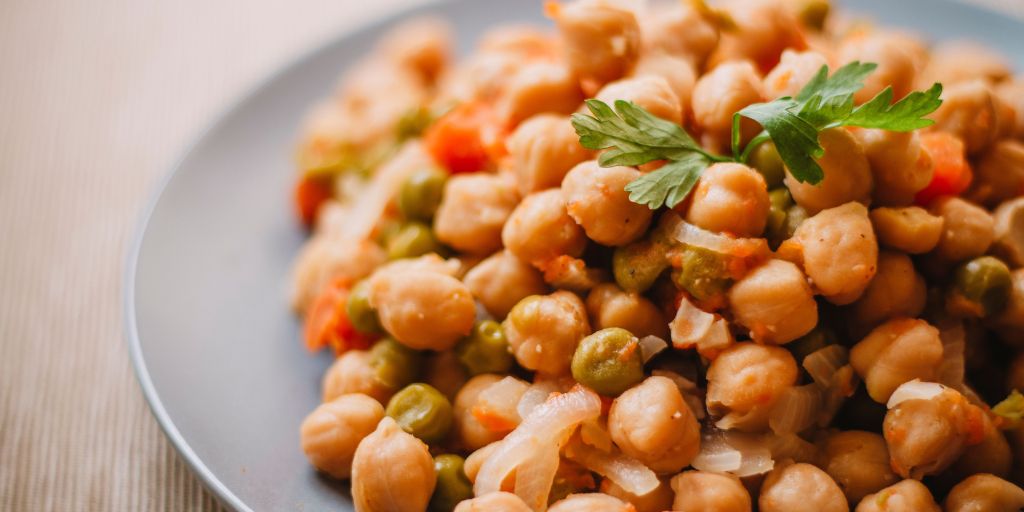
A couple of days ago, I woke up with an intuitively received phrase: “100 Kilograms of Legumes”. I wondered what the message was about. Was it about taking a measurable action to help people in need? Was it about launching a fundraising campaign where people could take action? Or was it about getting protein-rich food for myself and my kids to save money on food?
Legumes are plants that produce seeds inside pods. The edible seeds are a major source of protein, fiber, vitamins, and minerals. Common legumes include lentils, peas, chickpeas, kidney beans, black beans, soybeans, and peanuts.
After checking with ChatGPT, I learned that one can make 1,500 meal portions from 100 kilograms of dry lentils, chickpeas, or other legumes. That could be a couple of weeks of nutrition for 100 people in need, or lunch for a small family of four for the whole year. The cost of 100 kg of legumes is between 250 and 500 EUR.
This intuitive message, combined with ChatGPT research, led to more rational posts on my Instagram feed and pushed me into a more analytical mindset for the rest of the day. As a result, I later started analyzing the sustainability of the donation platform I am building: make-impact.org.
make-impact.org – what is it about?
Make-Impact.org is going to be a centralized European donation platform that inspires and enables people to support the causes they care about most. By making charitable giving more engaging, transparent, and accessible, the platform aims to increase support for humanitarian and development aid projects across Europe and beyond.
I believe that businesses are the primary drivers of progress, innovation, and economic growth. However, progress often comes with unintended negative consequences. For example, the production of plastic has made many useful goods affordable and accessible worldwide, but the resulting waste now fills landfills and harms wildlife. Similarly, advances in AI have improved productivity and accelerated information exchange, but they have also made some jobs obsolete, creating a need for retraining and education.
These side effects of progress do not disappear on their own; they need to be addressed. While businesses are often the driving force behind progress, it is usually cause-oriented organizations that deal with the damage left behind, whether environmental, social, or humanitarian.
There are also many initiatives that meaningfully improve human well-being while remaining largely unrecognized, such as community centers, public parks, urban gardening initiatives, open-source projects, Wikimedia, public art funds, museums, and libraries.
I believe that donations should not be forced by law, but rather based on awareness, free will, and financial strength. People need a clear way to understand where help is needed in this complex system, and how they can actually contribute. Make-Impact.org should clearly show real-world problems and make it easy to understand how much money is needed to solve them. It connects awareness with action, so people don’t just see the issues, but also know how to respond in a meaningful way.
The project is a few times larger than my current capacity to manage, but over time I hope to meet the right people to help me launch and run it. My current goal is to implement it technically within the next 6–12 months on weekends, and see where it leads: “The way will show the way”.
Conversion from visitors to donors
The estimate is 100,000 to 300,000 donations per year via Make-Impact.org. That would be roughly 275 to 820 donations per day.
Let’s see how many visits a website would need to handle to support that number of donations.
- Visits from search engines or social media of uninformed users (so-called cold traffic) often result in a 0.1%–1% donation conversion rate.
- Highly targeted visitors who already intend to donate: 1%–5%+ is possible.
- Returning users and supporters of specific causes can convert even higher (and that will be the main goal of the platform).
To reach 100,000–300,000 donations/year, the platform would need roughly:
- At 0.5% conversion: 55,000–164,000 visits/day
- At 1% conversion: 27,500–82,000 visits/day
- At 2% conversion: 13,750–41,000k visits/day
27,500 visits/day is approximately 19 visits per minute, or 1 visit every 3 seconds on average.
Conversion from one-time donors to recurring donors
The platform should support both one-time and recurring donations. Non-profits often prefer recurring donations because they allow better long-term planning.
Recurring donors also tend to stay engaged much longer than one-time donors. On average, they remain active for about 5 to 8 years, compared to just 18 months for one-time donors.
Another study found that the average lifetime of recurring donations is about 7.77 years, and up to 77% of recurring donors continue donating year over year.
Therefore, the goal of the platform is to optimize engagement so that users either choose recurring donations or regularly return to support causes. Openness, transparency, gamification, respectful communication, mailing lists, and collaborative campaigns could all help achieve this.
Technical infrastructure
The platform can be monolithic at first, hosted on a single server. This minimal setup could cost around 40 to 100 EUR per month, including domain, web server, database, media storage, email provider, and backups.
The server can scale vertically by adding more CPU and RAM. However, at some point, traffic will grow too large and performance may degrade.
When the number of donors reaches hundreds of thousands, it is recommended to switch to a serverless or multi-server architecture (likely using Docker and Kubernetes). At that stage, monthly costs could exceed 1,000 EUR.
Money transfers would likely be implemented using Donorbox or Betterplace integrations, or by redirecting users directly to non-profit websites, which ideally would notify Make-Impact.org about transactions via webhooks or a REST API.
Typical donation sizes in Europe
Donation amounts vary by country based on average income, cost of living, familiarity with recurring giving models, trust in online donation systems, and tax incentives.
In many platforms, the average one-time donation is around 20–60 EUR. A typical recurring donation is 5–20 EUR per month. People in Southern and Eastern Europe tend to donate smaller amounts per donation compared to those in Northern and Western Europe.
Northern and Western European countries like Germany, the Netherlands, and Sweden generally show higher average donation sizes due to higher income levels and a stronger donation culture.
Common one-time donations:
- 20–50 EUR — very typical online range
- 50–150 EUR — common for strong engagement (campaigns, disasters)
- 150–500+ EUR — occasional major gifts
Recurring donations:
- 10–25 EUR/month — very standard
- 25–50 EUR/month — strong supporters
In Southern European countries such as Italy, Spain, and Portugal, disposable income is generally lower.
Common one-time donations:
- 5–20 EUR — very common online range
- 20–50 EUR — engaged donors
- 50–100+ EUR — less frequent
Recurring donations:
- 3–10 EUR/month — entry-level recurring support
- 10–20 EUR/month — committed donors
In Eastern European countries such as Poland, Romania, Bulgaria, and Hungary, incomes are also lower, which is reflected in donation amounts.
Common one-time donations:
- 3–15 EUR — frequent online range
- 15–40 EUR — strong engagement
- 40–100+ EUR — less common
Recurring donations:
- 2–8 EUR/month — typical range
- 8–15 EUR/month — strong supporters
Marketing
At an early stage, acquiring a new donor usually costs between 50 and 250 EUR, depending on how people are reached and in which region. Online campaigns are often cheaper, while direct outreach or in-person methods tend to be more expensive. For Make-Impact.org, a realistic starting point would be around 50 to 100 EUR per new donor per year. If some of them become recurring donors, their lifetime value can grow beyond 120 EUR per person.
Customer acquisition cost is quite high compared to average donation sizes. The math is not mathing yet, but there are ways to improve it.
Some ideas:
- Short, emotional videos can be very effective — people respond strongly to impact stories. AI-based storytelling could also combine raw data into more compelling narratives.
- Partnering with brands or companies where employer matching or rewards amplify donations.
- Gamification: milestones, progress bars, or friendly leaderboards to increase engagement.
- Shareable challenges, such as a “7 Days of Giving” campaign.
- Collaborating with influencers or micro-influencers aligned with the mission.
Funding
I am looking for long-term funding options so that taking commissions from donations is not necessary. Make-Impact.org should remain open, transparent, and informative to build trust. Any ideas are welcome.
Final words
Take the numbers here with a grain of salt, just like a dish of legumes. ChatGPT might be hallucinating or estimating based on limited data from a few countries. Still, this overview gives a better sense of what might be ahead for this project.
Wish me luck, and join the waitlist.
Cover picture by Adrianna CA